Luzerne County Manager C. David Pedri said he is determined to reach a resolution soon to unlock millions of dollars tied up in an expired tax-break program.
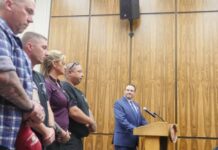
“This is a priority, and it will be addressed within the next 30 days,” Pedri told citizens during his recent public forum.
Litigation may be the option he recommends to the county council for its consideration, but Pedri said he will entertain any ideas.
The Tax Incremental Financing, or TIF, program diverted property tax revenue from new development along Highland Park Boulevard and at the Arena Hub Plaza in Wilkes-Barre Township to fund infrastructure improvements on Highland Park and Mundy and Coal streets.
County council members had voted to close out the TIF in September 2015, arguing all the infrastructure improvements authorized under the 1998 agreement had been funded and completed.
County officials have argued they are entitled to anything left in the pot, which currently contains $3.1 million, based on the agreement wording and past monetary contributions of Wilkes-Barre Township and the Wilkes-Barre Area School District. The Coal Street widening in Wilkes-Barre also was funded by the TIF, but the city did not forego tax revenue.
However, the county Redevelopment Authority, which administered the program, has not released the funding, largely due to the city’s continued argument that the money must remain in the bank to fund the future extension of Coal Street to Pennsylvania Avenue so it links to Union Street.
Wilkes-Barre officials have not relaxed their position that funds should remain intact to help fund the Coal Street extension, said Attorney Bill Vinsko, who is handling the matter for the city.
“The city is going to make sure this project goes forward because it’s very important to the downtown,” Vinsko said recently.
Vinsko said he plans to resume discussions with county representatives to reach a mutually beneficial agreement. The state transportation department included the Coal Street extension in its long-range plan of prospective projects, but 2021 is the earliest the project would qualify for 80 percent state funding, officials have said.
The city’s push to finish the remaining 280 feet of Coal Street also involves the county because the extension would cut through a parking lot belonging to the county’s human services building on Pennsylvania Avenue in addition to crossing a rail line owned by the redevelopment authority, which is an independent body governed by county council-appointed board members.
City Solicitor Tim Henry also noted a portion of the remaining TIF must fund the local match, around 20 percent, of a settlement with the Interfaith Heights Apartments over the city’s taking of some of the development’s land to widen Coal Street.
Henry said he can’t divulge the settlement amount until the agreement is signed by all parties, which should happen within two weeks. The state will cover the lion’s share of the settlement, he said.
Pedri said at his forum he was relieved a council majority rejected a proposal to count on the $3 million in revenue in the 2017 budget because there’s no guarantee when the county will receive its share, particularly if litigation is required. The amount also is uncertain due to the Interfaith settlement and whether the township and school district are entitled to a portion, he said.
Reliance on big-ticket, one-time revenue sources also creates a shortfall the following year when that gap must be filled, Pedri said, echoing comments that have been made by some council members. Instead, Pedri said the TIF receipts should be placed in a reserve to reduce the county’s $9.4 million deficit in an attempt to get back in the black.
Councilwoman Kathy Dobash has complained about delays reclaiming the money and has called for a forensic audit of the TIF, according to a Dec. 15 email she sent to her council colleagues that also urges them to vote to direct the manager to pursue litigation and recover all remaining funds.
The 1998 agreement clearly states money from the three taxing bodies will be used to fund the $3.9 million local share of the $12.5 million development of Mundy Street and Highland Park Boulevard. That loan was paid off several years ago.
However, the agreement also gave the county Redevelopment Authority “sole judgment” to enter into contracts and agreements to spend available TIF revenue on work that “shall further the purposes of the project” as outlined in the “Highland Park Redevelopment Area” plan. This plan included the reconstruction and extension of Coal Street “through the City of Wilkes-Barre,” even though Coal Street isn’t identified in the taxing bodies’ agreement, documents show.
While previously acting as county solicitor in 2015, Pedri said the authority made its own agreement with the city that included multiple amendments to spend TIF revenue on the Coal Street widening and extension project through Jan. 31, 2014.
The three taxing bodies gave up revenue in the following amounts for the TIF: school district, $5.3 million; county, $4.1 million; and township, $315,045, records show. County officials also have maintained the county is entitled to all remaining funds because the school district missed several years of turning over revenue.
County council members agreed Tuesday they will require Pedri to start providing regular updates on the status of the county’s TIF claim.