More than 19,000 people across the country have filed new claims seeking compensation for health problems allegedly caused by contamination, including some originating from the former Kerr-McGee Corp. railroad tie manufacturing operation in Avoca, court records show.
The filings stem from a pot of money, last valued at $31.76 million at the end of 2015, set up through bankruptcy court for victims who did not receive settlements.
In addition to new claims, a total 4,400 past and present Avoca area residents have been or will be compensated as part of a bankruptcy settlement with the former Kerr-McGee and related entities. Another 1,600 had obtained settlements from a previous consolidated suit against the company that treated wood in Avoca from 1956 to 1996.
Ohio-based Garretson Resolution Group, which was appointed to oversee the bankruptcy settlement trust, asked the bankruptcy court for guidance on processing new claims in June, citing ambiguous wording on the matter.
U.S. Bankruptcy Judge Michael E. Wiles in New York issued a decision earlier this month granting that request. According to his opinion, a filing seeking compensation will qualify as a “future tort claim” if one or more of these conditions are met:
• The alleged exposure to a harmful substance occurred on or after Aug. 12, 2009.
• The exposure occurred before that date, but no injury or disease was manifested until on or after that date.
• Both the exposure and manifestation of an injury or disease predated Aug. 12, 2009, but the claimant is able to establish the failure to file a timely claim should be excused on grounds of excusable neglect or that sufficient due process was not granted in the dismissal of a past claim.
Claims falling into the first two categories will be processed by the trustee, but claimants in the third category must file motions with the bankruptcy court, Wiles said.
In his ruling, Wiles said the 19,000 claims filed is a “far greater number than anyone anticipated” and that additional claims continue to be filed each week.
A prior judge had required notices in local newspapers informing potential claimants of the 2009 filing deadline and approved the “form and manner” of these notices, Wiles wrote.
Still, Wiles said hundreds of prospective claimants without legal counsel have filed responses to the court in recent months, with some arguing they were not aware of the 2009 deadline to file claims and that notice of the date “was not reasonably calculated to reach claimants.”
Some of these filers also said they were not aware of their injuries before 2009 or were aware but had no reason to understand they were caused by exposure to creosote or other products released into the environment, the judge wrote.
Jim Haddock, a former Avoca mayor who pushed for legal action against the former Kerr-McGee Corp., has complained that Garretson is taking too long to process new claims, saying he has “grave concerns” that suffering people exposed to carcinogens must wait.
Haddock, who is among the 4,400 plaintiffs who were approved for settlement, has said Garretson should have filed the court action requesting guidance sooner and supported a liberal interpretation to qualify new claims, estimating thousands more people who lived or worked near the Avoca operation received no compensation and should, due to their cancer, respiratory problems, heart conditions, rashes and other skin disorders.
A breakdown of the 19,000 claims linked to the Avoca facility was not available.
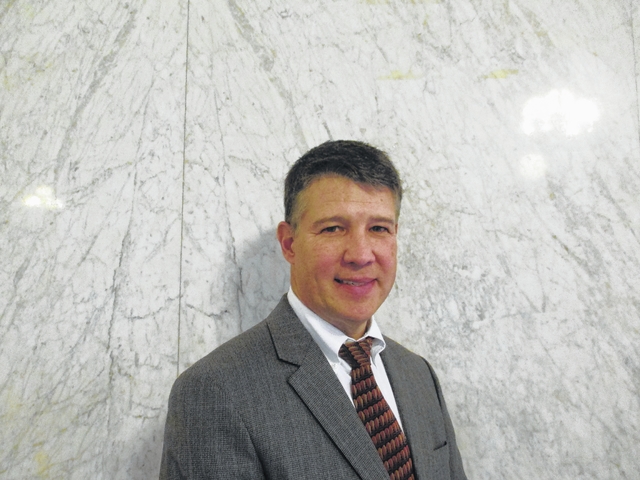
Currently Luzerne County’s civil and criminal court record overseer, Haddock said Wiles’ opinion shows he “put a lot of time and effort” into researching the issue to be fair.
“It’s a good decision. The judge certainly spelled out a roadmap to find out who qualifies and get this more than $30 million disbursed,” Haddock said, describing the upcoming review of 19,000 cases by the trust and court as a “major undertaking.”
In its request seeking court guidance, the trust had proposed granting claims only for those who were diagnosed with a disease or condition after Aug. 12, 2009, arguing that standard was “fair and appropriate” because claimants who were aware of their health problems prior to the 2009 date had the opportunity to file a claim preserving their right to receive a settlement as part of the bankruptcy case — a right exercised by the 4,400 other Avoca-area plaintiffs.
Under this standard, a “high percentage” of the claims would be denied because the “vast majority” reported diseases or conditions that appeared or were diagnosed before the 2009 date, its filing said.